Is Spec Driven Engineering the Future of Software Development
The old picture of a software engineer, headphones on, typing raw code for hours, is starting to look outdated.
Not useless. Not dead. Just incomplete.
A new kind of software work is taking shape: engineers describe what a system should do, AI agents generate much of the code, automated tests check the work, and humans review the architecture, risks, and trade-offs. That shift is showing up in tech news for a reason. Reports around companies like Proton suggest that by 2026, some teams may slow or end hiring for traditional hand-coding roles and move developers towards specifications, prompt architecture, verification, and test design.
That sounds scary if your identity is tied to writing code line by line. But it’s also a huge signal: software engineering may be becoming less about syntax memory and more about clear thinking.
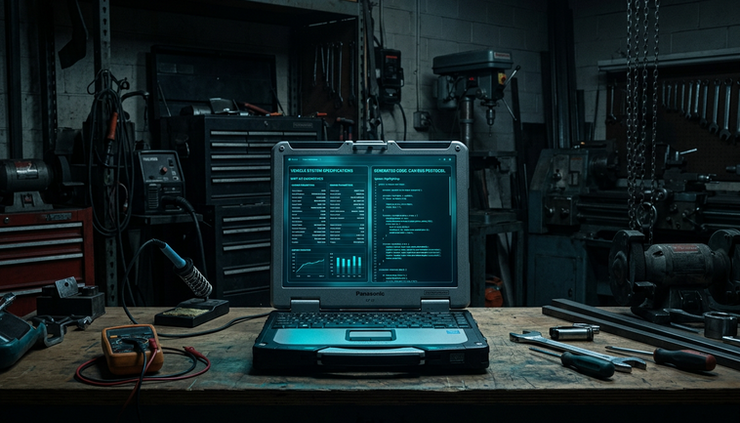
Hand-crafted code isn’t dead, but its centre of gravity is moving
Let’s be clear: code still matters.
Someone still needs to understand data structures, APIs, memory, security, latency, failures, permissions, and all the boring things that make software reliable. AI-generated code doesn’t magically remove complexity. In many cases, it hides complexity until something breaks.
What’s changing is the unit of work.
For years, a developer’s output looked like this:
Write code
Debug code
Write tests
Review pull requests
Ship changes
In a spec-driven workflow, the output starts earlier:
Define the expected behaviour
Describe constraints and edge cases
Set quality checks
Ask AI systems to generate implementation options
Verify the result
Decide what is safe to ship
That means the developer becomes less like a typist and more like a systems designer.
A good specification is not a vague command like:
`Build a login page`
A useful spec says what should happen when a password is wrong, how rate limits work, what errors users see, how sessions expire, what data gets stored, what privacy rules apply, and how the feature should behave under load.
That level of thinking has always separated strong engineers from average ones. AI just makes the gap more visible.
Why companies are moving towards spec-driven engineering
The reason isn’t hard to understand. Businesses want software faster, cheaper, and with fewer production failures.
AI coding tools already help developers generate boilerplate, convert code between languages, write documentation, and suggest fixes. The next step is letting AI agents handle larger chunks of work while humans define the intent and boundaries.
A spec-driven workflow can help teams in a few practical ways.
It reduces blank-page coding
Nobody loves writing the same CRUD endpoints, validation rules, or UI state logic again and again. AI is good at producing first drafts for predictable patterns.
That frees engineers to spend more time on hard questions:
Should this feature exist at all?
What can go wrong?
What happens when data is missing?
What should the system refuse to do?
How will this behave at scale?
It makes requirements harder to ignore
A lot of bugs don’t come from bad syntax. They come from fuzzy requirements.
If the spec says, “Cancel pending payments when an account is closed,” the system has something concrete to test. If the requirement lives only in a chat thread or someone’s memory, it’s easy to miss.
Spec-driven work pushes teams to write down expectations before code appears.
It creates a better audit trail
When AI agents generate or modify code, teams need to know why a change happened. A written spec gives reviewers a reference point.
The question shifts from “Does this code look clever?” to “Does this implementation match the agreed behaviour?”
That’s a healthier question.
The new developer skill stack
The future developer won’t stop learning code. But the skill mix will change.
Syntax will matter less than judgement. Knowing every method in a framework won’t be as useful as knowing when the generated solution is unsafe, wasteful, or too complex.
Here’s what becomes more valuable.
Old focus | New focus |
Memorising syntax | Reading and correcting generated code |
Building every function by hand | Writing precise specifications |
Manual debugging | Designing automated checks |
Solo implementation | Coordinating AI agents and human reviewers |
Code volume | System correctness |
A developer who can only say “I know JavaScript” may feel pressure. A developer who can say “I can define the behaviour, test the risks, review the output, and own the system” stays useful.
That’s the real job security angle.
The safest career move is not to reject AI coding tools. It’s to become the person who knows when they’re wrong.
AgentOps is where this gets serious
Spec-driven engineering becomes even more interesting when it connects with AgentOps.
Chatbots answer questions. Agents take action.
A customer support chatbot might tell someone how to reset a password. An autonomous agent pipeline could verify the customer, check account status, trigger the reset flow, log the event, escalate unusual cases, and create a follow-up ticket if needed.
That’s a very different world.
In software teams, multi-agent systems could soon handle tasks like:
Creating a feature branch from a spec
Generating backend changes
Updating frontend components
Writing unit and integration tests
Running checks in a sandbox
Opening a pull request with notes
Flagging unclear requirements
This is why the latest tech conversation is moving beyond “Can AI write code?” The bigger question is “Can AI run parts of the software delivery process?”
The answer is yes, but only with strong controls.
An agent that can deploy code needs boundaries. It needs permissions, logs, rollback plans, test gates, and human approval for risky changes. Without that, speed becomes a liability.
The more autonomy you give an AI system, the more important verification becomes.
This is where spec-driven engineering and AgentOps fit together. Specs tell agents what to do. Tests tell humans whether the agents did it correctly.

Code verification becomes the main battlefield
AI-generated code can look clean and still be wrong.
That’s what makes verification so important. In a spec-driven world, tests are not an afterthought. They are part of the product definition.
A good automated test suite should check more than the happy path. It should cover:
Invalid inputs
Permissions and access control
Data loss scenarios
Performance limits
Privacy-sensitive behaviour
Failure recovery
Compatibility with existing systems
Security reviews matter too. AI tools may produce code that works in a demo but introduces weak authentication, unsafe dependencies, or poor error handling.
This is where experienced engineers still earn their place. They know that software is not just code that runs. It’s code that keeps running safely when users, networks, devices, and data behave badly.
Spec-driven teams will need people who can ask sharp questions:
What assumptions did the agent make?
Did the implementation add hidden dependencies?
Are we exposing more data than needed?
Can the feature be abused?
Does the test suite prove the important behaviour?
Those questions can’t be replaced by autocomplete.
Architecture matters more than syntax memorisation
If AI handles more low-level implementation, architecture becomes the premium skill.
Architecture doesn’t mean drawing fancy diagrams. It means making decisions that will be expensive to undo later.
For example:
Should this be one service or several?
Where should data live?
What should happen when a downstream system fails?
How do we keep user data private?
Which parts need human approval?
What should the system never do automatically?
AI can suggest patterns, but humans still need to choose based on context.
A payment system, a healthcare app, a school platform, and a food delivery tool may all use APIs and databases. But the risks are different. The cost of a wrong decision is different. The tolerance for automation is different.
That’s why architectural oversight matters.
The future senior engineer may spend less time writing every line and more time reviewing system shape, failure modes, and long-term maintainability.
Embodied AI raises the stakes again
Software is also leaving the screen.
Recent progress in smaller reasoning models and more efficient chips is pushing AI into robots, spatial devices, vehicles, appliances, and workplace machines. Once AI systems act in the physical world, the cost of bad software changes.
A broken chatbot is annoying. A broken warehouse robot can damage goods or hurt someone. A spatial computing assistant that misreads a room can create real safety issues.
That means spec-driven engineering becomes even more important for embodied AI.
A robot doesn’t just need code that says “move forward.” It needs rules like:
Stop when a person enters the path
Slow down near fragile objects
Ask for help when confidence is low
Never enter restricted zones
Record decisions for later review
These are specifications. They describe behaviour, limits, and safety expectations.
As robotics and embodied AI grow, engineers who understand both software logic and real-world constraints will be in demand. The job won’t be to memorise a syntax trick. It’ll be to define safe behaviour in messy environments.
What this means for developer job security
Will some traditional coding jobs shrink? Yes, likely.
Especially roles built around repetitive implementation, basic bug fixes, simple UI changes, and boilerplate-heavy tasks. If a team can generate those safely with AI, it will.
But that doesn’t mean software engineers vanish.
It means the bar moves.
The strongest developers will build skills around:
Writing clear technical specs
Understanding system design
Reviewing AI-generated code
Building strong test suites
Managing agent workflows
Handling security and privacy risks
Explaining trade-offs to non-technical teams
Junior developers may feel the biggest squeeze because companies once used simple coding tasks as training grounds. If AI handles those tasks, teams need new ways to train beginners.
That’s a real problem. The industry can’t magically create senior engineers without giving people room to become one.
Good teams will still need apprenticeship. They’ll need juniors to read generated code, write tests, improve specs, review small changes, and learn how systems fail. The path may change, but learning by doing stays essential.
A quick design note for the tools of this future
The user’s brief included a dark mode-first visual direction, and honestly, it fits this topic well.
Spec-driven engineering tools will likely feel less like plain code editors and more like mission control panels. They’ll show specs, agent activity, test results, risk flags, logs, and approval states in one place.
A strong interface for this kind of work could use:
Deep slate or charcoal backgrounds like `#0B0F19` or `#111827`
A single accent colour such as Electric Cyan `#00F2FE`, Neon Violet `#7C3AED`, or Emerald Green `#10B981`
Soft glass panels for agent cards and test results
Fine borders using `rgba(255, 255, 255, 0.08)`
Clean display typography like Inter Display for headings
That’s not just decoration. When engineers review complex agent activity, visual clarity matters. A calm interface helps people spot what needs attention.
So, is spec-driven engineering the future?
Yes, but not in the lazy “AI will do everything” way.
Spec-driven engineering is the future because software is becoming too fast, too connected, and too automated for vague instructions. As AI agents write more code and perform more tasks, humans need better ways to define, test, and control what those systems do.
Hand-crafted code won’t disappear. There will still be places where performance, safety, custom logic, and deep debugging require careful human coding.
But the most valuable work will move closer to intent.
The engineer of 2026 and beyond won’t just ask, “Can I build this?”
They’ll ask:
“What exactly should this system do?”
“How will we prove it works?”
“What should never happen?”
“Who approves risky actions?”
“Can we understand the system after it changes?”
That’s the shift.
The future of software development is not fewer engineers and more magic. It’s better specifications, smarter agents, stronger verification, and humans who can still see the whole system when the code is moving faster than ever.
Comments